Originally Posted: 5 October 2026
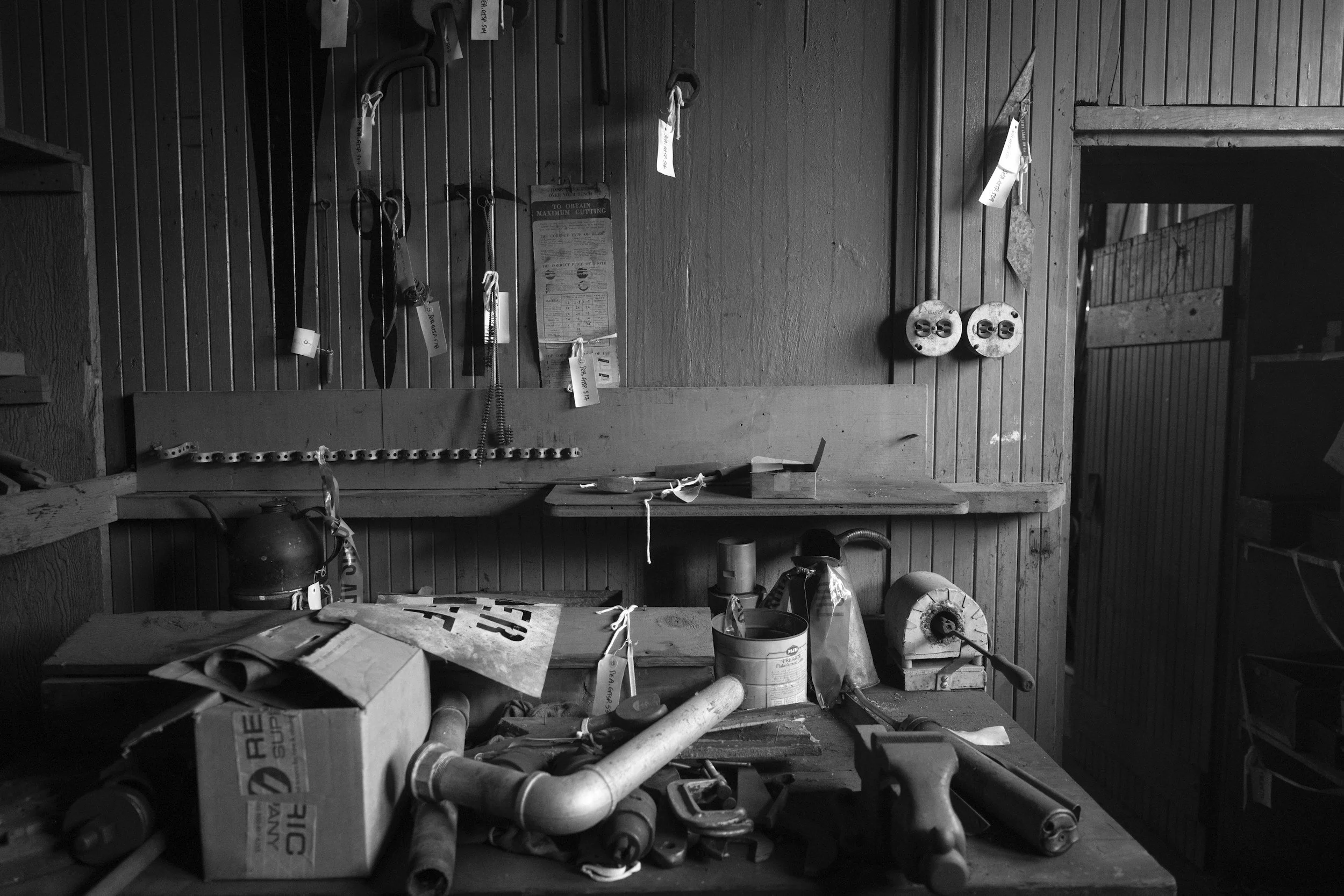
Everything has its place. The work continues.
There is something slightly strange about building something that matters to you. You spend so much time working on things that other people can't see yet, and because there is always something else that could be improved, it can become difficult to tell when you've actually done enough.
I've found myself thinking about that quite a lot lately.
We're still building. There are still prototypes to refine, materials to test, decisions to make, and details to work through. From the outside, that might look like we're taking our time. I don't really see it that way. We're making sure that the things we're building are ready before we ask anyone else to rely on them.
The difficulty is that ready and finished aren't the same thing.
There will probably never be a point where everything is finished. Even once something is launched, we'll learn from using it, we'll notice things we hadn't considered, and we'll find ways to make it better. That's simply part of building anything properly.
But that doesn't mean you can use "there's always more to improve" as a reason to postpone everything indefinitely.
At some point, you have to decide that the important work has been done.
That's where I've started to appreciate the testing process Evan has been talking about. He's much less interested in whether something looks finished than whether it has actually been put through enough use and pressure to tell us something useful.
If a prototype shows a weakness, that's not necessarily bad news. It means we've found the weakness while we still have the opportunity to do something about it.
I think the same principle applies to the company as a whole.
We're learning what needs to be solved before launch and what can continue to evolve afterwards. Some things are fundamental. They need to work properly from the beginning. Other things can be refined as we learn more.
Knowing the difference is probably one of the harder parts.
It's very easy to spend time making something look finished because that feels like progress. A new photograph, a nicer page, a small design change—those things are visible, and visible progress can be reassuring.
But sometimes the more important work is the work nobody sees.
It's checking something again. Asking whether an assumption still holds. Looking at a problem from a different angle. Testing something that seemed fine the first time. Deciding that a particular piece of work isn't good enough yet and going back to it.
None of that makes for a particularly exciting launch story.
It does, however, make for a better foundation.
That's probably why I'm not feeling particularly anxious about 2027. We're not treating it as a date by which every possible detail has to be completed. We're using the time between now and then to build, test, learn, and make the decisions that need to be made before we put the work in front of other people.
When we eventually launch, I don't want it to feel like we've suddenly reached the end of something.
I want it to feel like we've reached the point where what we've built is ready to stand on its own.
There will still be things to learn after that. There will always be things to learn.
But that's different from launching something before we've done the work required to understand it.
For me, that's the difference between being finished and being ready.
We're not trying to finish everything.
We're trying to make sure we're ready for what comes next.
—Elysia