Originally written: 07 September 2022
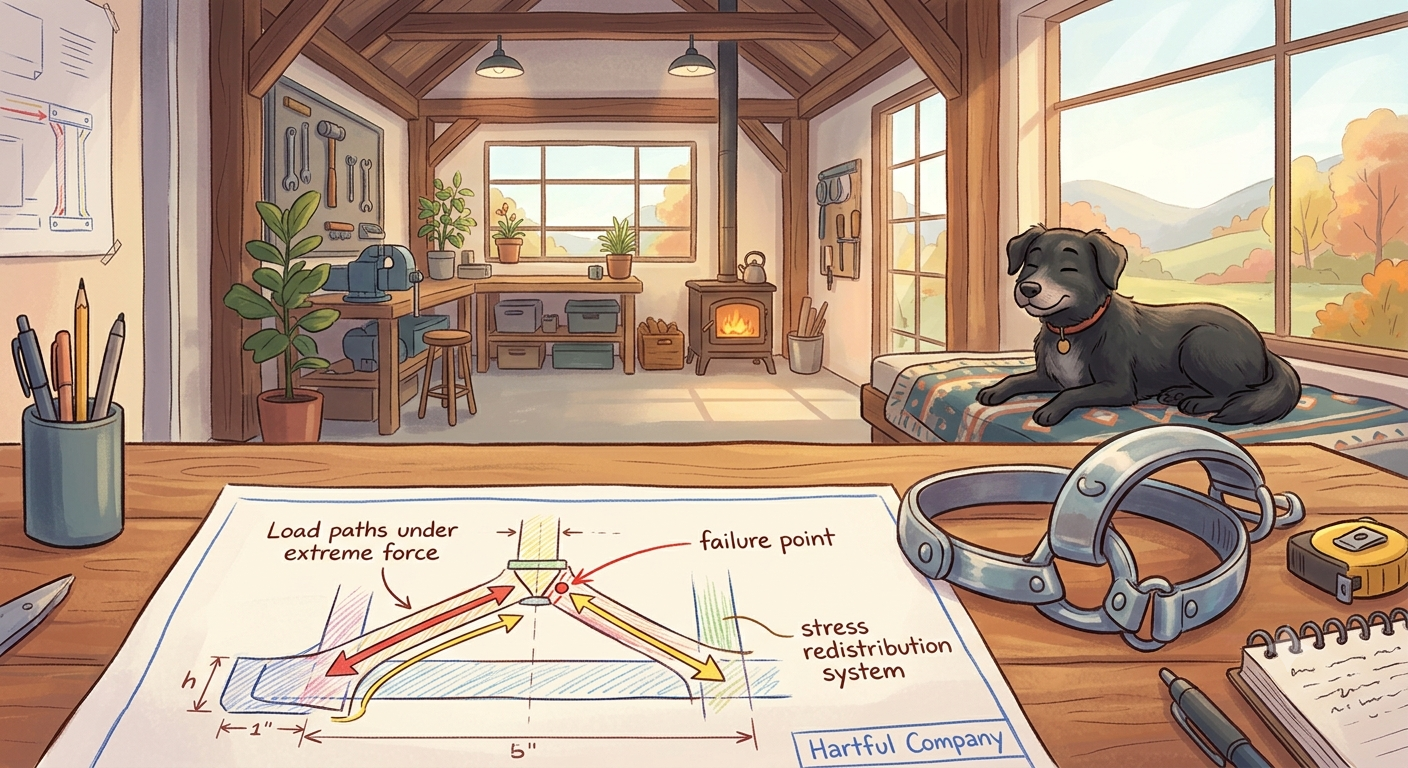
Designing for the worst day means creating systems—and environments—that absorb stress instead of fracturing under it.
Evan has always designed directly from failure states. He doesn't look at what works when everything goes perfectly right; instead, he focuses entirely on what happens when everything goes completely wrong—when someone suddenly lunges, when someone panics, when someone slips, or when someone freezes in place. Emotionally, however, we used to live our lives from success states. We constantly hoped for calm, expected smooth walks, and anticipated good days. True recovery thoroughly changes that mindset. Recovery actively designs for the bad days, and then builds worlds where those bad days don’t actually break anything.
At home, that philosophy translates into very deliberate choices: creating furniture placements that prevent animals from cornering each other, mapping out walking routes that intentionally minimize surprises, designing entryways that absorb transitions instead of amplifying them, and arranging spaces that allow for distance without introducing isolation. In product design, that exact same way of thinking looks like engineering load paths that fail predictably, building systems that redistribute force instead of concentrating it, creating interfaces that remain highly usable under immense stress, and maintaining safety margins that don’t disappear the moment the unexpected happens. In both cases, whether we are managing our home or our engineering, the goal is never control. The goal is always stability under disturbance.
— Elysia