Originally Posted: 30 September 2026
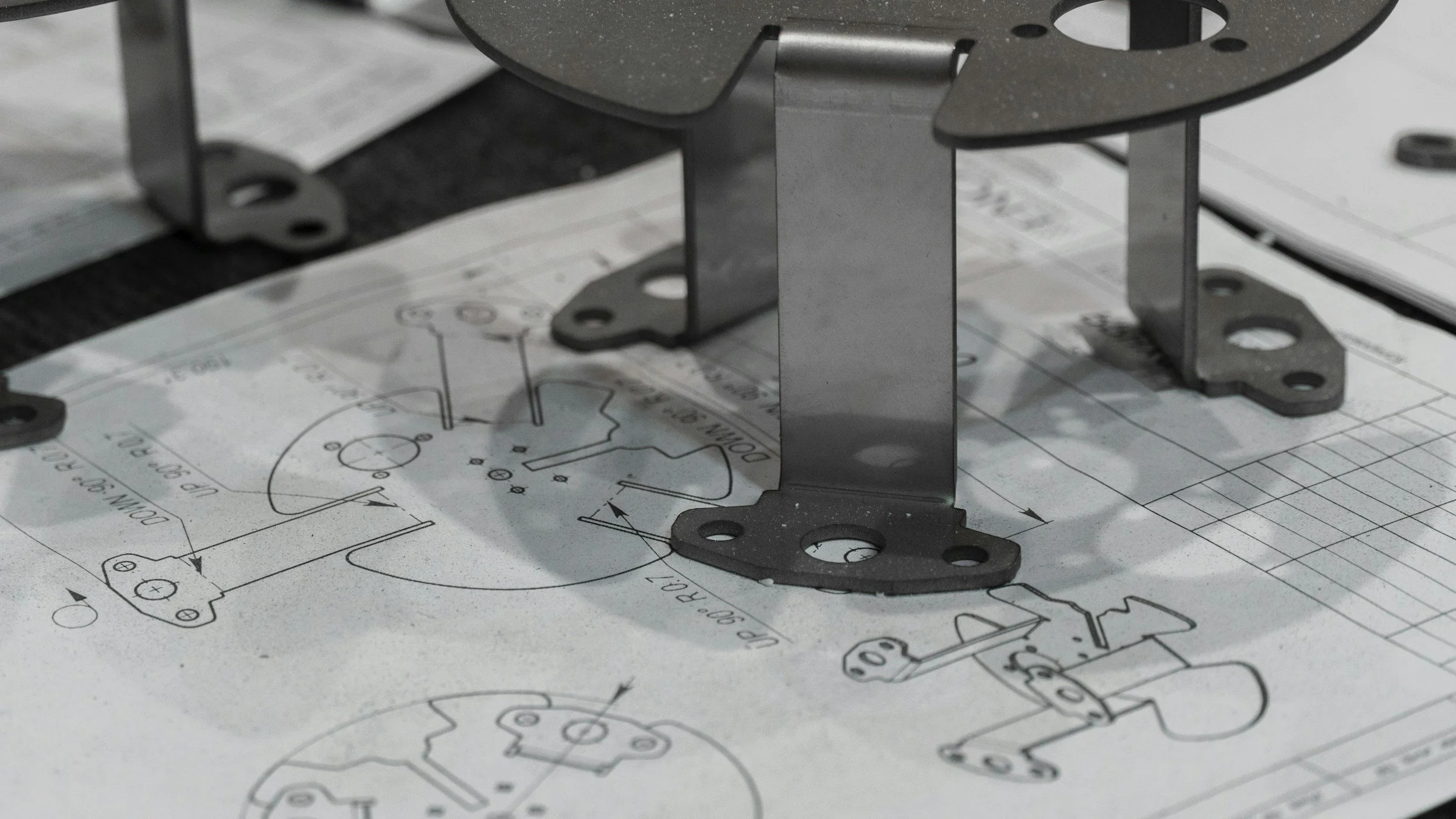
Parallel Progress Hardware Design
When you are developing a physical invention, it’s rare to work on just one single component in isolation. A complete product is an ecosystem—a combination of load-bearing mechanisms, housing, soft goods, structural fasteners, and human-interface touchpoints.
It’s easy to look at these different elements as competing demands on your workbench, as if time spent refining a mechanical latch is time stolen from testing a material's tensile strength.
In practice, we’ve found the opposite to be true. When you approach every component with a shared design discipline, workstreams don't divide your momentum. They sharpen it.
Whether you are designing a high-load physical mechanism or refining the ergonomic interface of a safety harness, the core structural challenges remain identical. A weak joint, an unaccounted stress point, or a slight misalignment in a hinge will fail under pressure, regardless of how good the rest of the assembly looks.
You cannot fix a fundamental architectural flaw in a physical product by adding cosmetic finishes at the end. You have to get the underlying mechanical logic right first.
Subjecting one part of a design to rigorous stress analysis forces you to ask harder questions about the rest of the system. Breaking down hidden assumptions in your primary mechanism reveals subtle structural weaknesses in the housing long before you go to tooling.
Working across multiple physical subsystems also creates a natural rhythm that prevents tunnel vision.
When you spend weeks focused exclusively on solving a single mechanical problem, it's easy to lose perspective or become attached to a flawed iteration simply because you’ve invested so much time in it. Stepping back to work on material testing or load distribution provides necessary cognitive distance.
When you return to the mechanical assembly a few days later, you see the physical prototype with fresh eyes. The point of friction that seemed impossible to solve often reveals a far simpler, more elegant engineering solution.
Parallel progress isn't about multi-tasking or spreading yourself thin. It’s about building a unified engineering system where every physical test and structural refinement directly informs the complete product.
Every prototype stress-tested and refined on our workbench serves a single overarching goal: ensuring that everything bearing The Hartful Company™ name is built on an unshakeable foundation. By applying rigorous design discipline across every layer of hardware engineering, we make sure our products don't just work on paper, but stand up to real life.
We’re continuing to build, test, and refine. The progress is steady, the foundations are solid, and we look forward to sharing what comes next.
—Elysia