What “Safety” Actually Means in Dog Walking Design
Originally written: 04 November 2019
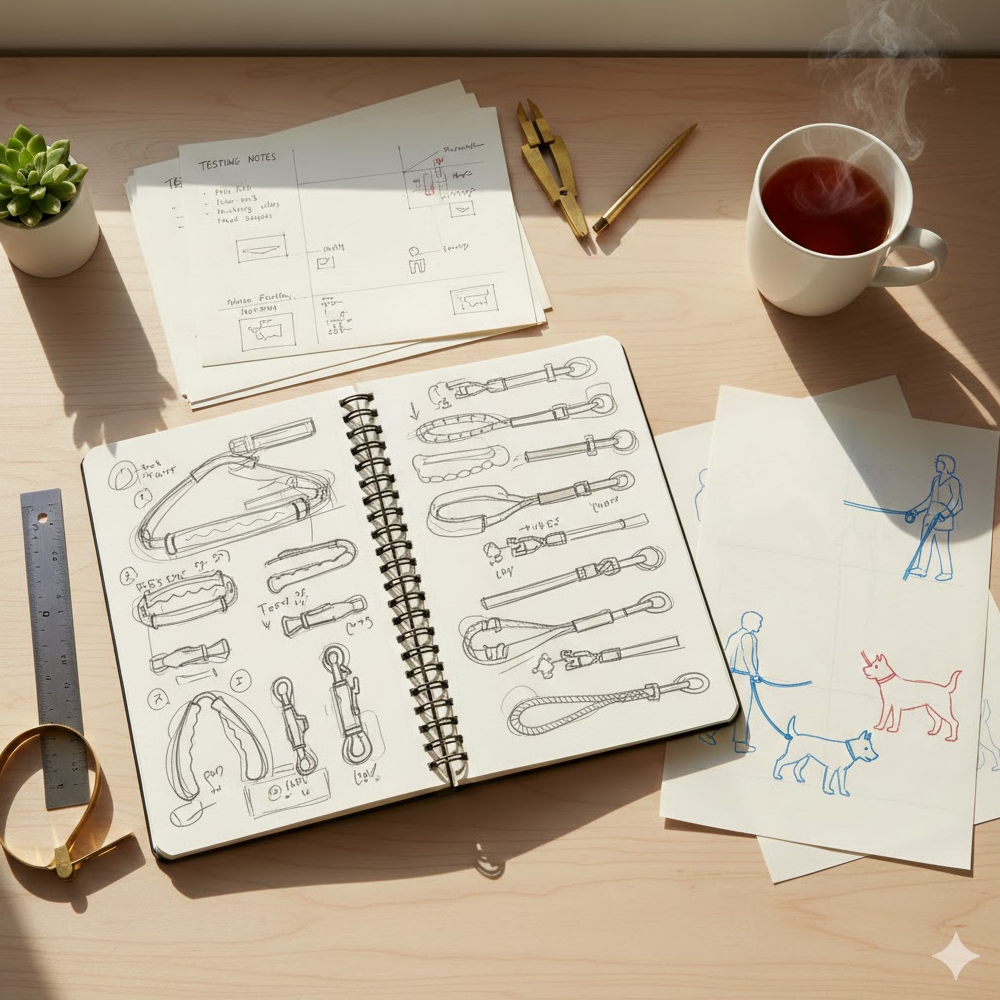
MyHerculead-Prototype-Iteration-Process
When people talk about dog walking safety, they usually mean preventing escapes or improving leash strength. But true safety starts much earlier — at the level of balance, ergonomics, and human reaction time.
At The Hartful Company, we define safety as preventing dangerous situations before they arise, not just surviving them after they happen.
The Problem With Reactive Design
Most pet gear is designed reactively:
Stronger clips after failures
Thicker cords after breakage
Padding after strain injuries
But these fixes treat symptoms, not causes. The real risks come from:
Sudden directional pulls
Unexpected torque
Loss of handler stability
Cross-lead tension buildup
Designing for Human Limits
Humans have physical limits — grip strength, balance recovery time, wrist stability — and yet most multi-dog systems ignore them entirely.
We began designing around:
Neutral wrist positioning
Load distribution across the hand
Reduced rotational strain
Passive stability instead of reactive correction
This approach reshaped what we believed dog walking equipment should feel like — calm, predictable, and forgiving.
Why We Didn’t Build Yet
It’s late 2019. We aren’t short on prototypes — we’re over 38 physical iterations deep. What we don’t yet have is certainty under chaos.
So instead of rushing to production, we’re choosing to stay in validation mode — stress-testing real-world scenarios, mapping failure paths, and rebuilding anything that introduces risk, strain, or unpredictability.
Because safe products aren’t rushed into existence.
They’re earned through repetition.