When Safety Systems Stop Needing Constant Correction
Originally written: 01 January 2024
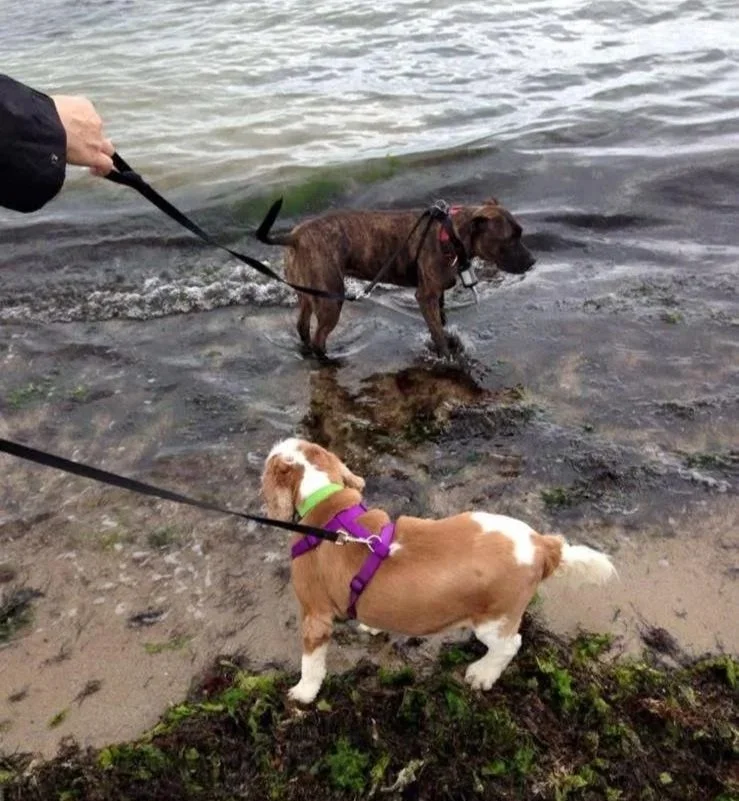
Stable Multi-Dog Walk
Most safety tools only work when environmental conditions are perfect—when a handler's grip is flawless, dogs move predictably, and no unexpected variables introduce themselves. Real-world walks, however, are built out of uneven sidewalks, sudden wildlife distractions, shifting hands, and moments where situations degrade faster than a human can react. That is where traditional equipment quietly fails. At The Hartful Company, we do not design for ideal conditions. We design specifically for what happens when conditions break down entirely, ensuring the mechanical system still holds.
The Real Problem Isn't Strength—It's Predictability
Early in our development process, we realized most leash systems are engineered around raw strength metrics, prioritizing stronger materials, heavier clips, and reinforced hardware. Yet, strength alone does not create safety; predictable force behavior does. When load paths shift unexpectedly—causing torque to build, tension to spike, or structural geometry to collapse—even the strongest equipment becomes fundamentally unsafe. A handler loses control not because a component physically snapped, but because the system stopped behaving consistently under stress. That is the exact failure mode we design around.
Designing Systems That Don't Require Constant Correction
By early 2024, MyHerculead had passed through dozens of physical prototypes and hundreds of digital iterations, all focused on a singular question: what does a walking system look like when it does not require constant micro-adjustments to remain stable? This line of inquiry led us to focus heavily on independent lead movement, balanced load distribution, rotational freedom without crossover, and geometries that refuse to bind under asymmetric force. Instead of forcing multiple dogs to move in perfect synchronization, the system allows each animal to move naturally without transferring rotational conflict directly into the handle. The result is a walking experience that feels distinctly quieter, calmer, and more forgiving when environmental conditions deteriorate.
Why Failure-State Testing Matters More Than Success-State Testing
Most equipment performs adequately during smooth, cooperative walks, but that is not when injuries occur. Injuries happen during sudden lunges, when two dogs move in opposite directions, when a handler slips, or when a grip shifts and causes a lead to wrap. Consequently, we test for those failure states first. Before any design reaches physical prototyping, we run virtual stress scenarios—simulating off-axis pulls, extreme rotational conflict, and uneven loading. We systematically reject designs that spike tension or bind under load. Only systems that remain stable under these severe conditions move forward into production. This methodology has intentionally slowed our development timeline, but it prevents us from building inherent failure into the system.
Stability in Real-World Application
When a mechanical system behaves predictably, handler behavior shifts automatically. Handlers stop overcorrecting out of panic, dogs stop reacting to sudden leash pressure, and overall movement becomes smoother. Tension drops and walks become quieter, not because the dogs have undergone behavioral changes, but because the mechanical system has stopped introducing instability into the equation. That remains our core design target.
2024 Engineering Outlook
Throughout the remainder of 2024, our pipeline is dedicated to refining geometry, materials, and manufacturing tolerances. We are not prioritizing speed to market; we are prioritizing absolute reliability under real-world stress. MyHerculead exists to make multi-dog walking feel calmer, safer, and completely predictable—not just on the good days, but on the hard ones.